 Skip to content

 Français



ANCIENT FOREST
$25.00
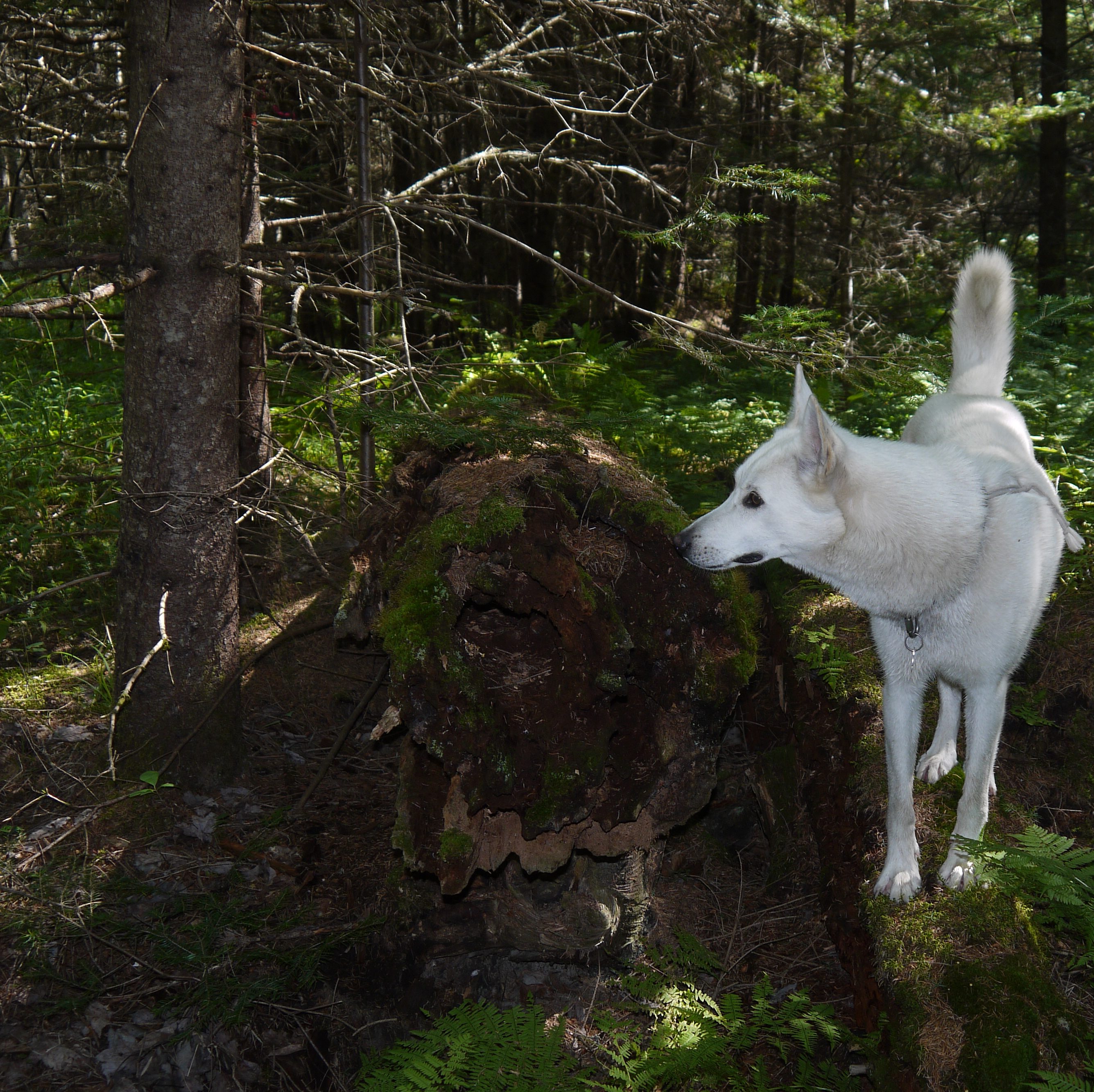
Ancient Forest incense is a scent-scape incense with a story. Its scent-story begins with a wave of uplifting conifer notes. You are standing in the warm, summer sunlight on a forest trail. You decide to travel off the path. The instant you step off the path you slide into an alternate reality. Where life is more vibrant and immersive. Where you must choose your own way. Pushing through the stands of small, dense conifers, that also bask in the sunlight of the open space, releases a fresh, green aroma all around that follows in your wake. As you go deeper in the forest the light dims. The conifer boughs are now high above, reaching for the sun. The understory opens up into a quiet, plush, green world. You are immersed in the smells of earthy humus, lichens and sweet decay. Like a temple or a cathedral, it is a place of deep calm that speaks of ancient ways inviting you to stay a while.
Ancient Forest incense lasts a long time on the incense heater. Its scent-scape doesn’t open up to the dark forest floor for at least a half hour and then its enveloping moss and musky scent can last all day. This fragrance is deeply calming. An incense excellent for meditation or to calm stressful or anxious states. As well, Ancient Forest can also be used for connecting to the unconscious for creative or ancestor work.
Incense notes: Moss, Musk and Conifers
Ingredients: Tree Mosses (Hypogymnia physodes, Usnea spp.), Labdanum resin, Pine resin, Balsam Fir resin, Agarwood, Patchouli, Juniper berries, Castoreum tincture, Lichen tinctures. Powdered with Juniper berries, Balsam Fir needles, Larch needles.
Heat this incense on an electric incense heater at 180º
Inspiration:
One summer, when I was just beginning to explore the forest for scented plants, I decided to harvest mushrooms, mosses and lichens to identify them and see if they could be of any use in the fragrant arts. That was the year I discover that dried Anamita muscaria mushroom can smell like vanilla cookies, that Monotropa uniflora (not actually a mushroom but growing among the fungi and but looking like one) has a rose smell in her soul and that female reindeer will actually guard a stand of the sweet and pungent Cladonia spp. lichens all winter. The most prolific lichen in the forest was one I found growing on all types of trees. This lichens scientific name is Hypogymnia physodes commonly called “Monks Hood Lichen”. from Greek word physōdēs “full of wind, whose root is physa which means bellows. Physodes is one of the most common lichens in the world.
Physodes holds her fragrance tight, not smelling very strongly until warmed. At my first sniff on the heater, she enchanted me. I adore Physodes earthy scent, not at all like the sour-scented, Usnea-lichen tribe that she often grows among. In Physodes scent there is something that speaks to the deep calm of the forest. This year she companioned me strongly. No matter where I wandered in the forest, my every step led to a place where she grew in abundance. It was a rough summer for me and I really appreciated sitting in her calm presence, asking for permission and then bringing a few members of her tribe home with me. She left signs for me everywhere that I was to share her medicine in my work.
Lichens are very old, estimated to have evolved during the Carboniferous period, 359 to 299 million years ago. The very first lichens probably date back to before the origin of land plants, when most of the biodiversity of Earth was in the sea. Maybe it was a wave from the ancient oceans that stranded some algae, fungi and cyanobacteria on a rock or in a tide pool. These three formed a union which we call lichens. Sometimes the mix contains a little yeast along with the algae, and bacteria, up to 90 different types, that are tucked under the surface of the fungus. The Fungi protects them and gathers nutrients and water from the air for the group. In return the algae give its excess energy from photosynthesis to the fungi. The co-collaboration of species in lichens form a neural network, a brain, exquisitely tuned for sensing and reaction to the environment. Scientists barely know anything about the interactions in the collaborative Lichen being, but there might be something we recognize in our bones. Animal cells have mitochondria and those mitochondria produce the energy that we use. Hundreds of millions of years ago those mitochondria were sperate organisms from animal cells. Then one day, some mitochondria were absorbed by some young animal cell. Instead of being digested they formed a mutually beneficial arrangement. A collaboration where our cells provided them shelter and they provided our cells energy.
I started my incense experiments with Physodes soon after I began harvesting. Because I do not like a lot of smoke with my fragrance, I have been experimenting making very thin Japanese-style incense sticks. I wanted to make a Physodes forward blend. I decided to pair Physodes with a medium-grade, Vietnam NhaTrang agarwood powder and a touch of castoreum tincture. The first time I lit a stick, I was pleased with the lichen forward aroma, but really surprised how calming its effects were. Far beyond what I would have expected from a mundane agarwood. In every incense blend that was rich with Physodes, I found the same resulting tranquility.
There seems to be something in Physodes that is soothing to the soul. Plants and animals react to psycho-active substances just like humans. The fungi tribe is well known for its psycho-active chemistry. Microalgae and cyanobacteria have just recently started to be studied, apparently rich in little known psycho-active compounds. It is not difficult to imagine that the Lichen community has developed medicines to see it through hard times. As one of the first terrestrial entities, at one time, Lichens and Mosses covered the Earth’s surface. They are true elders. The Lichen tribe have seen dragonflies the size of a seagulls and six-foot centipedes, survived tropical climates and ice ages, they saw the rise and fall of the dinosaurs. Lichens are exquisitely aware of what is in the air. Their survival has always depended upon it.
I am not the only one in the Human tribe receiving whisperings from Lichens and Mosses. Sensitive people everywhere are picking up this pulse of their energy going through the Earth System. I am amazed at the amount of people I know cultivating Mosses and Lichens in terrariums. The elder Lichens are sharing their calming medicine with humans in these difficult times, getting close with us, in order to teach us what they know.
For more information on the psycho-active possibilities of Hypogymnia physodes. See the Shulgin’s book “Phikal”, Chapter 5. Freely available at archive.org https://archive.org/details/pihkalchemicallo0000shul


Reviews
There are no reviews yet.