 Skip to content

 Français
Incense, Perfume, Plant Medicine, Spirituality, Trees
My Life with Balsam Firs – Healers of Body, Mind and Spirit

Dec
Just being surrounded by Balsam Firs satisfies my soul. Their fragrance inspires calm and presence of mind that comes with wisdom. I’m not the only one with a particular fondness for the scent of Balsam Fir. Most people who live in, and around, the Boreal Forest share this feeling. The scent memory of Balsam Fir is firmly imprinted in the psyche of Quebecers. The aroma of Balsam Fir, reminds them of their first contact with the non human habitants of the forest, camping, forest walks and the holiday season.
The presence of trees, their living spirit, is loving, wise and very approachable like grandparents. Trees are great communicators. Children seem to have an easy time listening to fir trees. Recognizing communication with other species is becoming increasingly common in our society. After all, we share 25% of our genes with trees. Our blood has the same structure as chlorophyll. The only difference is that our blood is built around iron (Fe), while plants’ chlorophyll is built around magnesium (Mg). This kinship was instinctively recognized by our ancestors, but has been lost over time. However, indigenous peoples living close to nature have retained this connection, which is difficult to explain in words. In the forest, the fir tree is at the center of forest communication with other species, as it is associated with a plethora of fungi which are the living conduits of the forest’s underground mycorrhizal network. The wood wide web.



For most of the year, I live off grid in the Boreal Forest which is filled with Balsam Fir groves. The Balsam Fir trees share with me not only their resin, needles and bark, but also their calm. I have spent thousands of hours walking and wildcrafting through the forest which induces in me a meditative state.
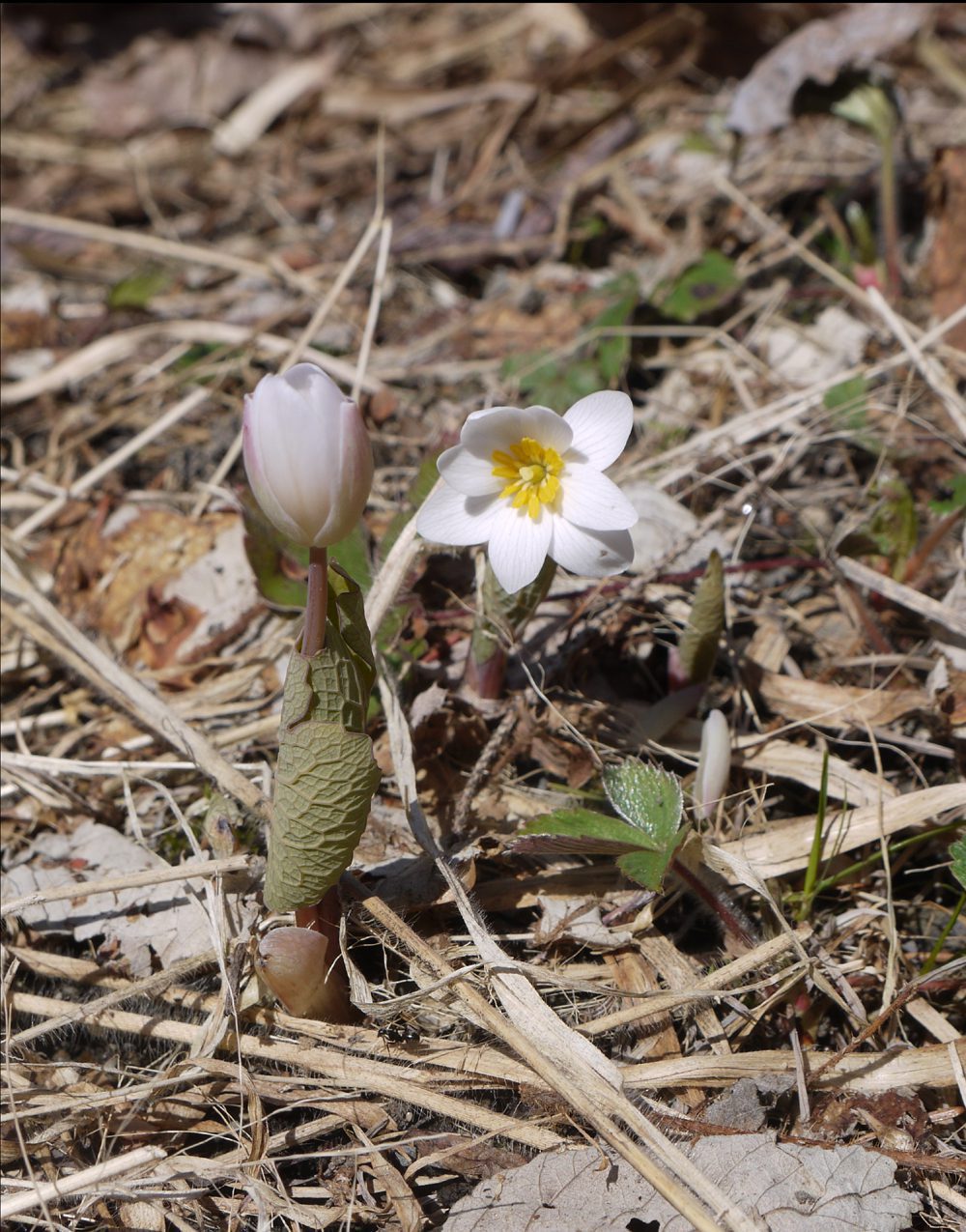
In spring, when the forest wakes up, I visit the young trees to pick their first shoots. There I also encounter the flowers as they reach for the sky: The red and White Trilliums, the fairy wands of the Wild Sarsaparilla, The fragrant Lily of the Valley and a milky way of Northern starflowers. These flowers will bloom and fade, before the leafy trees cover the sky, depriving them of the Sun.
While the Spring ephemeral flowers cover the understory, high above in the overstory, the male and female flowers of the Balsam Fir trees are also opening. Tiny pollen grains, containing two even tinier air bubbles, are carried by the wind to the waiting female flower, where they join and begin to form Fibonacci spirals which will become cones. I too am in the understory, gliding through the groves, collecting young Balsam Fir. I use the tasty shoots in teas. The tea tastes like green lemonade and has the medicinal benefits of stimulating the immune system and helping to relieve flu and cold symptoms.

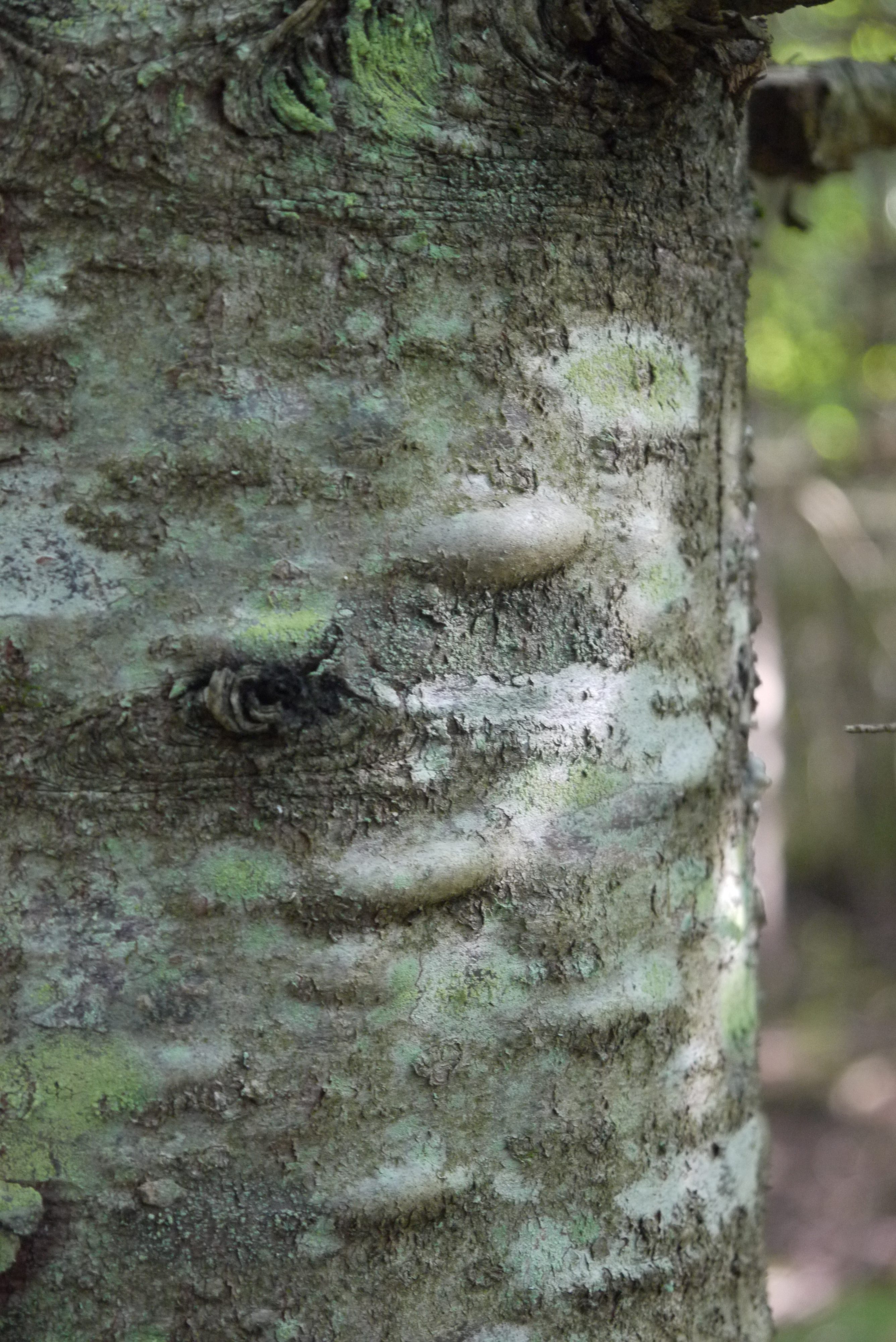

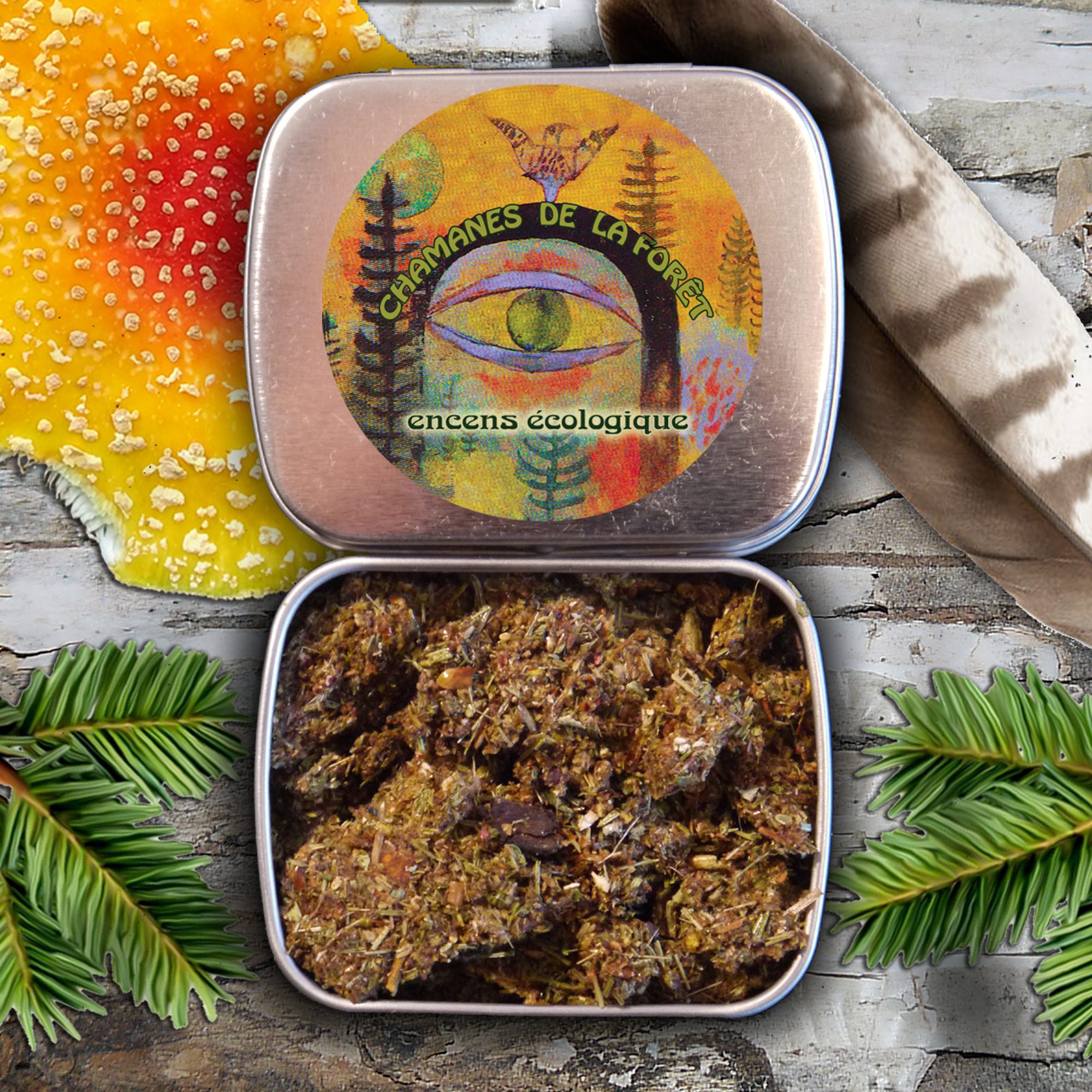
Later in the season, when the cool spring winds turn warm, I return to the Balsam Fir groves. All summer, I collect fir resin, drop by drop, from the resinous blisters on the tree’s trunk. These bubbles form spontaneously, without the tree being harmed. The resin will flow into my collecting cup only when the weather is very hot. It’s a slow, meditative work and hands become extremely sticky. I walk many kilometers through the mossy forest under-story on an average day. But the reward is well worth. The aroma of Balsam Fir resin is as beautiful as the finest frankincense and myrrh. It’s sparkling, sweet, slightly citrusy, strong evergreen scent is at the heart of many of my forest incense blends.
Because I don`t use a ladder, I can flit like a resinous moth from tree to tree. I’m completely immersed in my observation of the forest. The smells of the forest enchant me and I feel that everything is aligned. Native North American tribes used Balsam Fir resin, before colonization, as an antiseptic balm for wounds, cuts, burns and as a potion; to ingest for colds, tuberculosis, irregular menstruation and other problems. Balsam Fir resin is so clear and pure, that the light passing through it is perfectly balanced between the refractive index of ordinary and extraordinary rays. It is still used to mount slides in scientific laboratories.

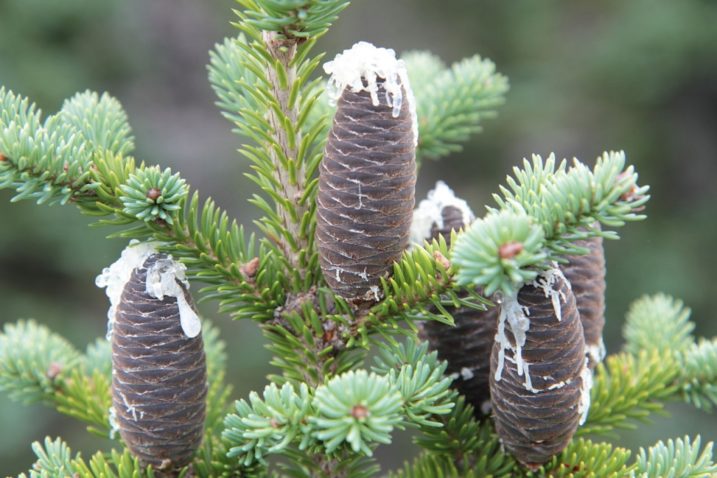
In Autumn, the resin turns taffy-like as the air gets colder. It is impossible to collects anymore. With the shortening days, the leaves of the hardwood trees turn red, orange and yellow. I wake up in the morning to see gardens sparkling with frost. Conifers also react to this change. After two hard frosts, preparing for the hard Winter to come, the resin content of the needles doubles to act as an antifreeze. At the ends of their branches, the next year`s needle and cone buds, cover themselves with a layer of waxy, sugary resin also as protection from the cold. After a few weeks, the tops of the fir trees, heavy with their loads of cones, and now unprotected from the winds by the leaves of their sister trees, sway precariously back and forth in the autumn winds.
Autumn can bring fierce winds of change. Balsam Firs are uprooted from the ground, victims of their cone-laden crowns. I can sometimes hear them falling. Eventually, the mature cones begin to disintegrate and fall from the tops of the trees. Their seeds are released into the wind, leaving behind a candelabra-shaped stem. When all the husks have fallen to the ground, the tree looks like a huge chandelier.
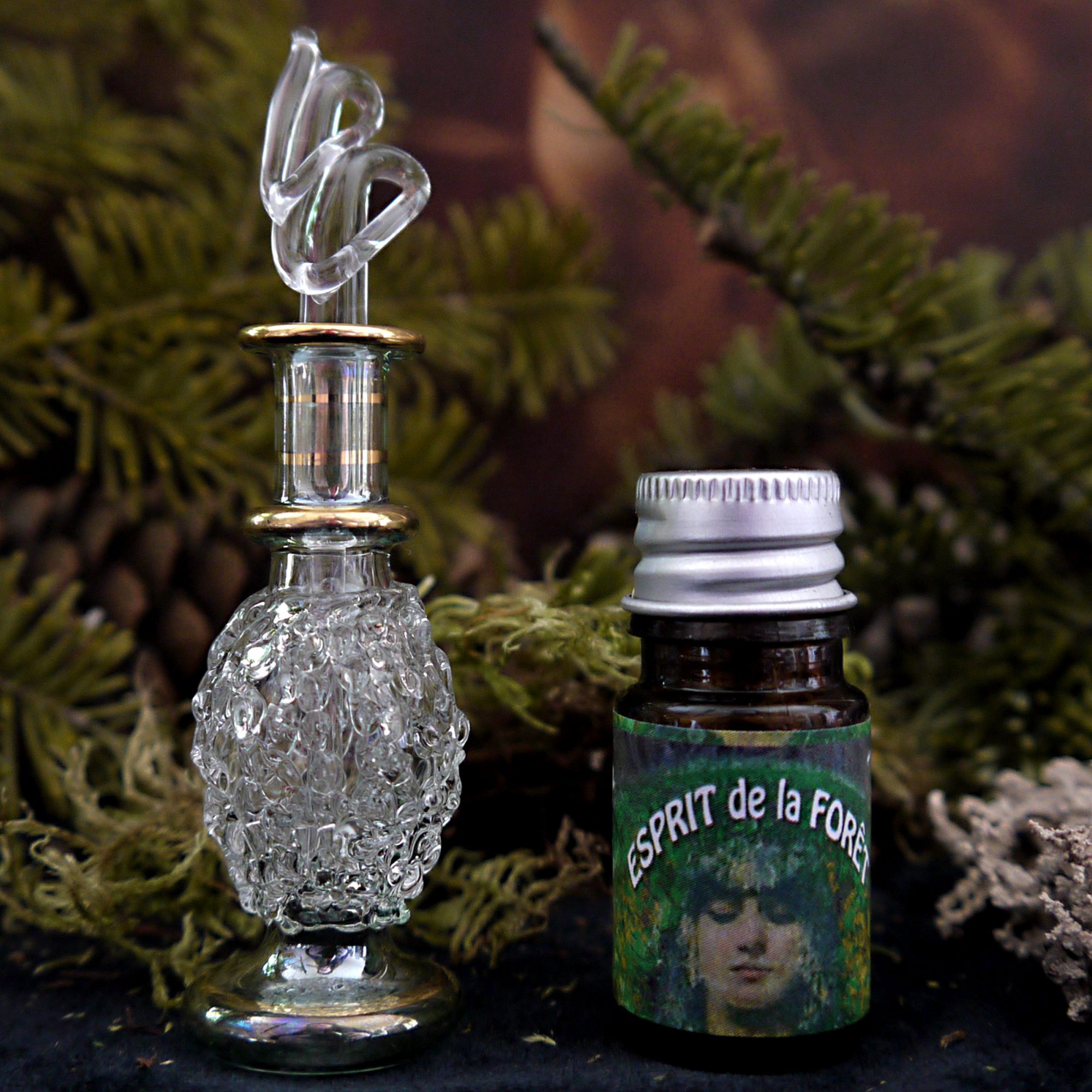
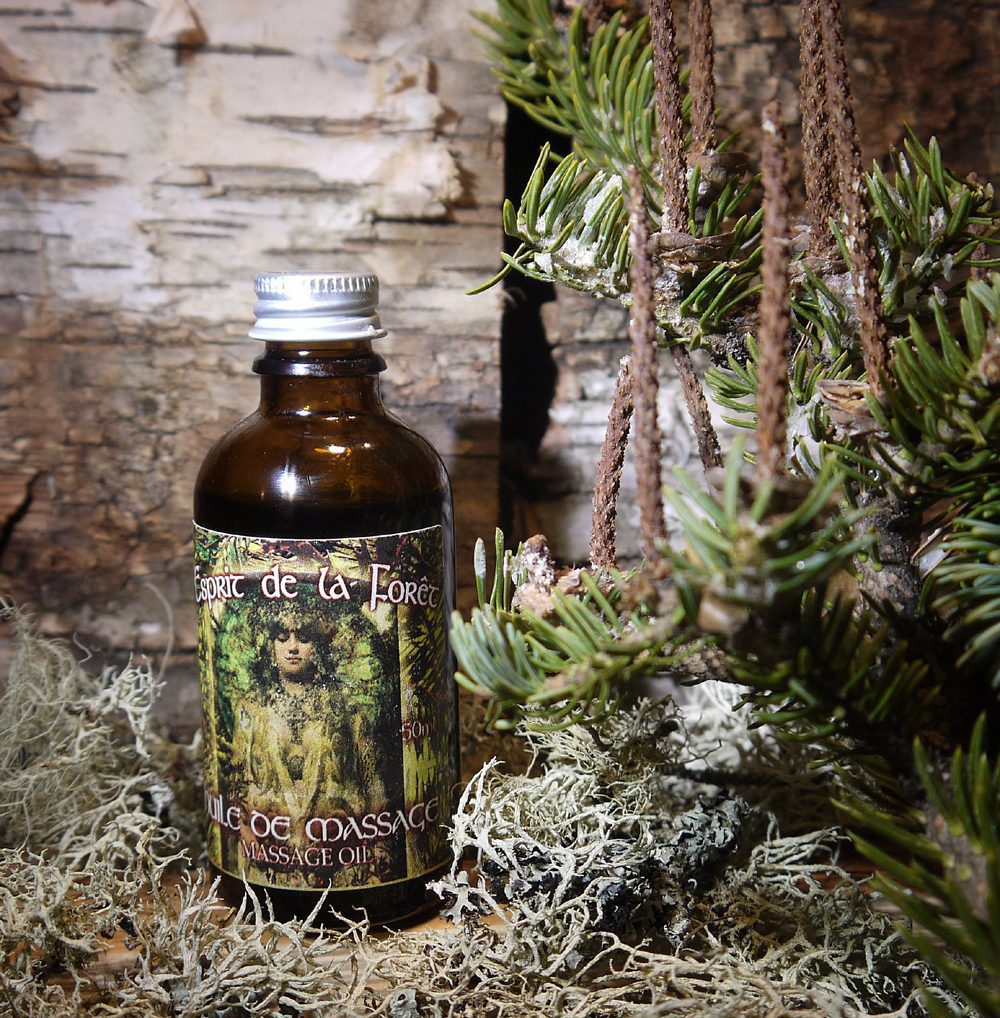
While I am saddened by the premature death of a tree, it is possible for me to make exquisitely scented massage oil and perfume from the fragrance-laden crowns of the Balsam Fir trees. Once captured in the oil, the fragrance of the crown is exquisite. The aroma is just like you standing in a Balsam Fir Grove. A rich balsamic aroma with sweet, warm, fruity, jam-like undertones. So touching to the soul, that I have had people cry just smelling it from a tester. My therapeutic oil, which is just the extracted crown oil, when applied to the skin, relieves pain, opens the lungs and brings joy to the heart. My Perfume “Forest Spirit” is more concentrated and complex, as if you are smelling the whole forest environment.
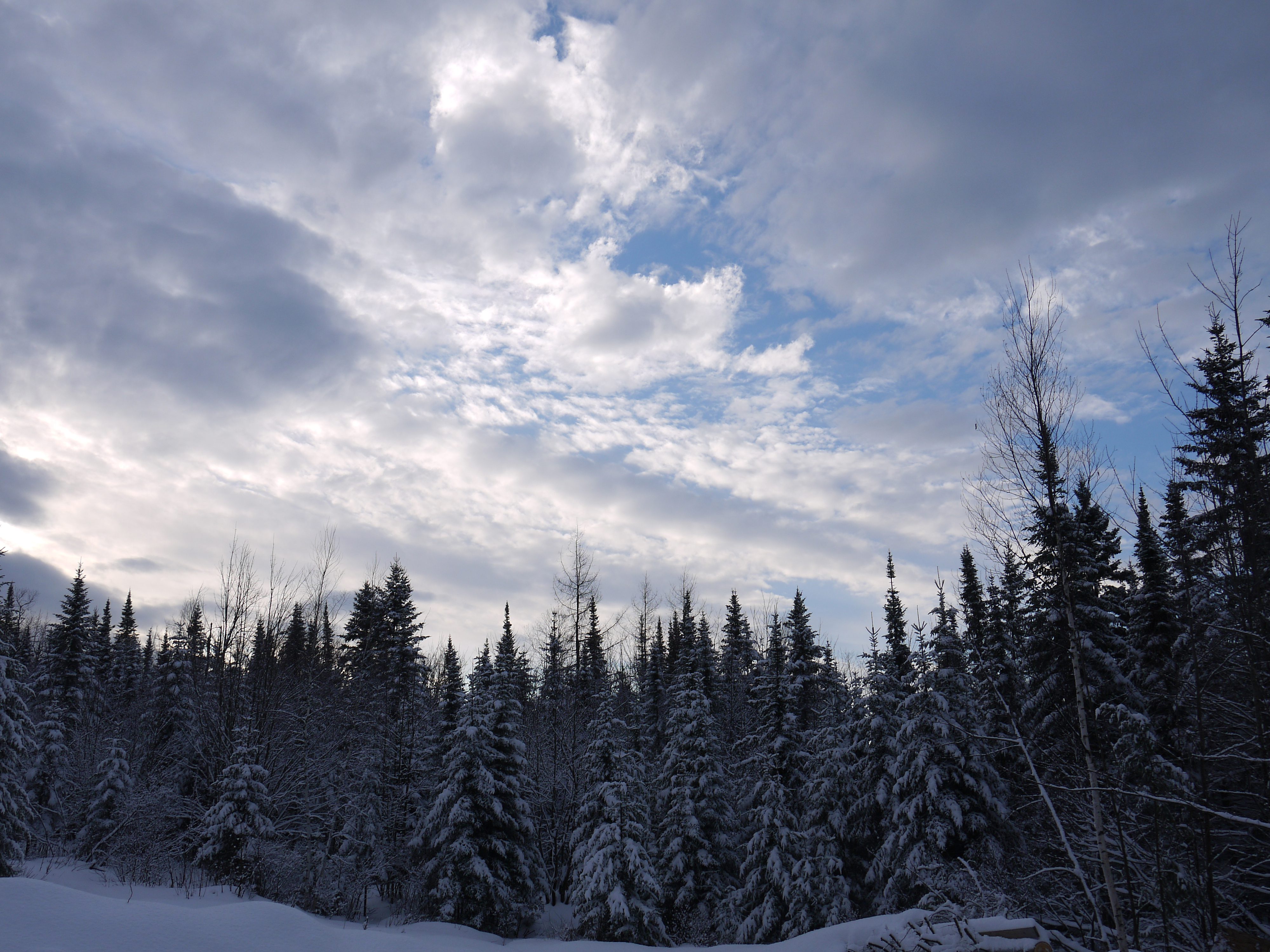


In winter, the snow-covered silhouette of the Balsam Fir trees resembles a church or temple. The snow-covered branches provide shelter from the cold, and from predators, for birds and other small animals. Around the holidays, I use balsam fir branches to decorate the inside and outside of my home, bringing a bit of the forest to the city.
Fir trees have been used in solstice celebrations since Neolithic times. First Nations people of the forest say that Balsam Fir, with their upright branches, “Pray for the world”. Balsam Fir’s physical and emotional properties help people get through this dark period. Yet, there’s an even deeper reason for using conifers, especially Balsam Firs, during the solstice season.
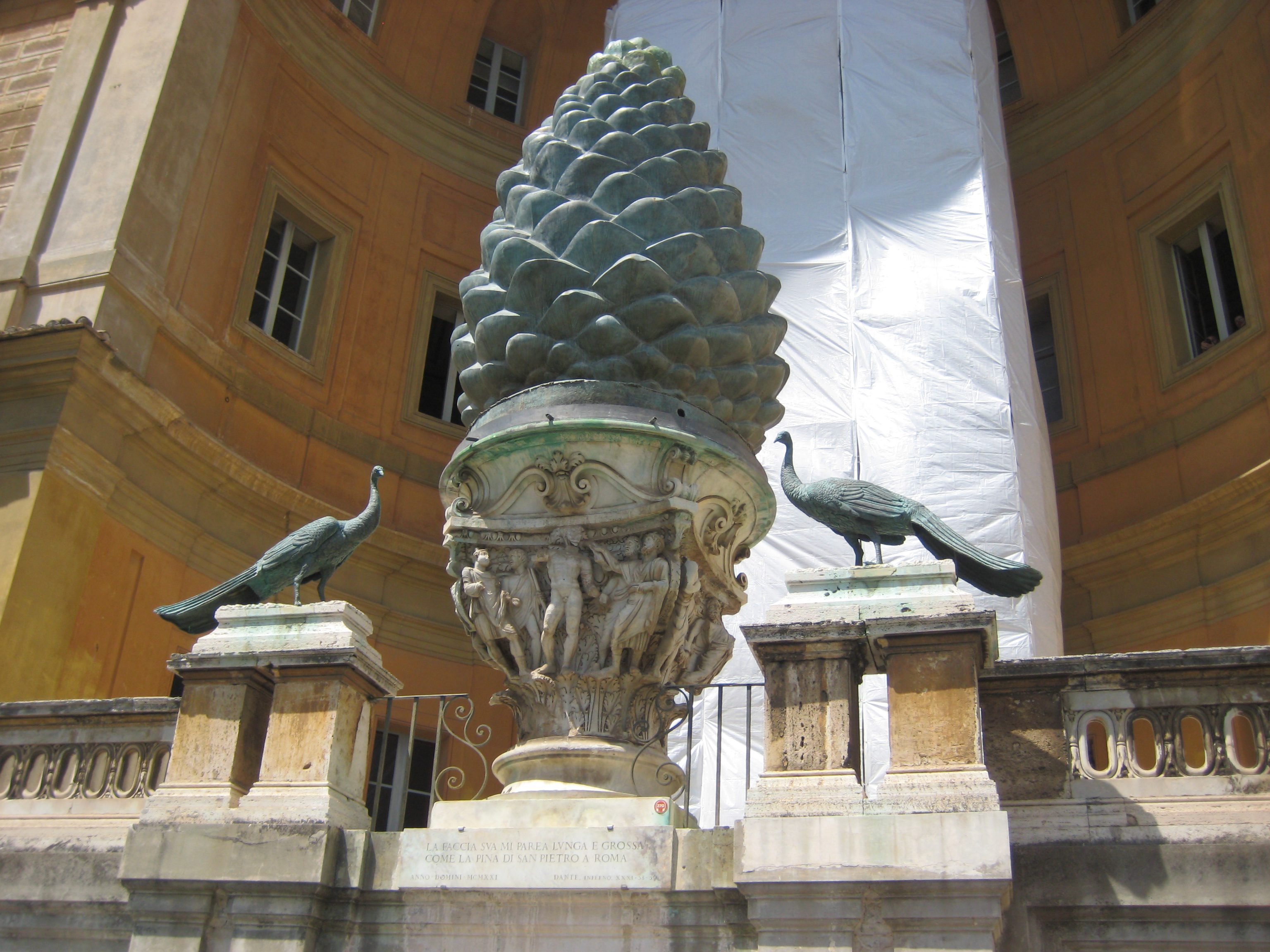
The symbol of the conifer cone as spiritual awareness and eternal life has a long history. While most writers describe the cones found in sacred artworks around the world as Pine cones, I believe they may actually be Fir cones. Most of the pine cones depicted in these works show cones in an upright position. Only the Fir cones rise in this position and are attached to a solid upright core. All the other conifer cones hang from the branches. Only Fir cones open and close their scales one by one, representing gradual illumination and detachment from worldly desires.
Conifer cones became associated with our own cone shaped organ, the pineal gland. The pineal gland is named after a pine cone. It is located at the geometric center of our brain and is linked to our ability to perceive light (illumination ). No other part of our body receives so much blood, except the liver. The pineal gland is the only part of the brain without a left and right side. It is the organ that produces DMT, now recognized as the spiritual molecule. Many consider the pineal gland to be the seat of the third eye, the “Seat of the Soul”.

