 Skip to content

 Français

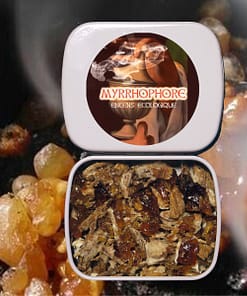


MYRRHOPHORE BAKHOOR
$25.00
Myrrh resin has been used since ancient times in incense, perfume, and medicine. Its aroma is grounding and peace-inducing. Growing in some of the harshest conditions on Earth Myrrh is also closely associated with supporting people through life transitions. A Myrrhophore is a doula of transitions who uses scent and sacred oils to support people through life’s thresholds, changes, and difficult times. In Arabic, the word “murr” means “bitter,” but Myrrh’s aroma can also be warm, sweet, earthy, and spicy. There are several types of Myrrh, and the finest can be used as a perfume in its own right.
“Not only is the air changed by this pleasant, refreshing scent, but a stressed body also finds the pleasure of sleep again. The troubles that have plagued us throughout the day are dissolved, and even our fantasies become as smooth as a mirror.” — Plutarch (AD 46–AD 119)
Incense Notes: Resinous, Spicy, Warm
Heat this incense on an electric incense heater at 180º. This incense can also be used on a coal.
Ingredients: Myrrhs — Commiphora kua resin, Commiphora erythraea essential oil, Commiphora guidottii absolute, Commiphora holziana essential oil; Woods — Sandalwood, Atlas Cedar, Agarwood; Extracts — Cardamom, Castoreum, Aged Patchouli; all bound with organic sugar and rose water.
Inspiration:

Over millions of years, Myrrh trees evolved remarkable adaptations for survival in arid and semi-arid environments: succulent stems, deep drought tolerance, and specialized root systems So well have they adapted to environmental stress that modern researchers use them as models for understanding plant resilience and developing conservation strategies for threatened ecosystems. Myrrh trees are experts at navigating change and transition. Not only that, but they mother the entire ecosystems through periods of change, providing food, medicine, and drawing up water from deep underground. And so it is, that throughout human history, Myrrh resin has also been used as both physical and spiritual medicine, accompanying people through times of change and transition
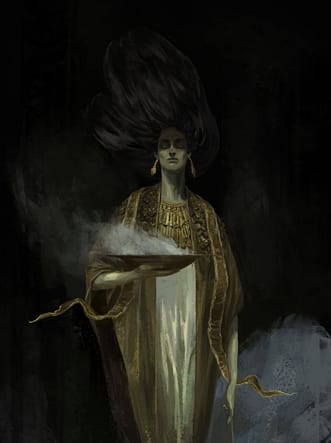
Throughout the Middle East and India, Woman going through a difficult birth were traditionally aided by burning Myrrh resin and massaging the abdomen with Myrrh oil. Afterward, Myrrh was blended into warming oils used to massage postpartum mothers, reduce swelling, and soothe the physical aches that follow labor. Newborns were also massaged with Myrrh oil, and Myrrh incense was burned near their cradles the days following birth.
Myrrh repeatedly appears in rituals that mark a person’s passage into a sacred or elevated state. In ancient Egypt, Myrrh was incorporated into aromatic oils and ointments used to purify and anoint priests and temple participants before they entered sacred spaces and approached the deity. In ancient Israel, Myrrh formed a major component of the sacred anointing oil used to consecrate Aaron and his sons as priests, while anointing with oil also became the defining ritual through which kings such as David were set apart for divine rule. In Imperial Russia, and to this day in England, coronation ceremonies have included the anointing of the sovereign with holy oil or Myrrh on the body, followed by the anointing of the consort. In Africa, the Oromo Muudaa tradition and the Himba use Myrrh and other resins in rituals associated with crossing into a new social or spiritual status.
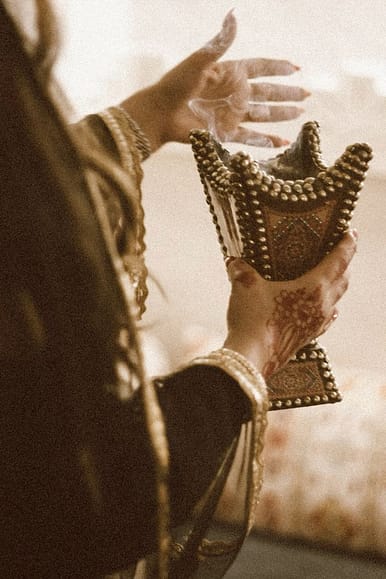
There is perhaps no more important social ritual of transition than marriage. The Song of Solomon uses Myrrh more than any other book of the Hebrew Bible, particularly in passages concerning courtship and the beloved. The bride describes her beloved as “a bundle of Myrrh … that lies all night between my breasts,” while the wedding procession is described as coming up from the wilderness “perfumed with Myrrh and frankincense.” Myrrh thus becomes an image of intimacy, desire, sensuality, and the passage into union.
At the end of life, Myrrh resin was used throughout Southern Europe, Africa, and the Near East in funerary rituals. In Rome, women known as “pollinctores” washed and anointed the body. In Egypt, priests and temple officials anointed the dead with Myrrh and other resins, both symbolically and for their preservative qualities. The most famous Myrrh bearers are the women who went to Jesus’s tomb carrying Myrrh and spices to anoint the body, only to find the tomb empty. In the Hebrew tradition, anointing the dead was understood as an act of pure kindness, since it could never be repaid.
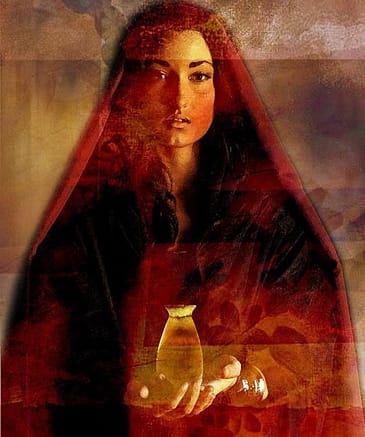
In the 21st century, with the revival of the sacred feminine, a group of women have come forward calling themselves “Myrrophores.” They claim an ancient lineage stretching back to Egyptian temple priestesses and through Mary Magdalene. Rather than acting as clinical aromatherapists, a modern or historical Myrrhophore is understood as a ritual guide who uses Myrrh and other scents to support people through major life thresholds, such as birth, deep transformation, and death.
Sometimes we have to guide ourself through life. Myrrh’s fragrance can be truly a solace during these changing and challenging times. I increasingly find myself drawn to formulating and incensing with Myrrh during my daily life.


Reviews
There are no reviews yet.